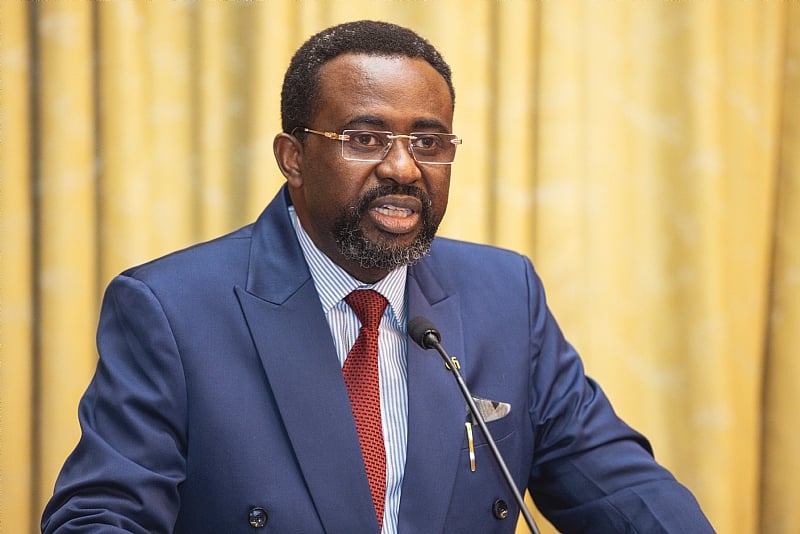


The Office of the Special Prosecutor (OSP) says Ghana’s fight against corruption remains active, resilient and firmly on course, despite intense pressure and resistance during the latter part of 2025.
In its second half-year report for 2025, Special Prosecutor Kissi Agyebeng described the period as one of sustained institutional effort, marked by prosecutions, asset seizures, international cooperation and preventive work. He concluded that the country’s anti-corruption agenda is “fully lighted-up and forcefully alive.”
According to the report, the latter half of 2025 saw what the Special Prosecutor termed exemplary hard work across the Office. Several high-profile cases were filed in court, reflecting a steady transition from investigation to prosecution. At the same time, a number of ongoing investigations reached advanced stages after extensive and careful inquiries, positioning the OSP to conclude more cases in the near future.
As part of its enforcement mandate, the Office seized several prime assets suspected to be linked to corruption and related offences. These assets, both movable and immovable, are being held pending the outcome of trials and possible forfeiture proceedings. Mr Agyebeng stressed that asset seizure is a critical strategy for disrupting the benefits of corruption and reinforcing the principle that illicit gains will not be protected.
The report also highlighted progress in international cooperation. During the period under review, the OSP successfully transmitted an extradition request through the Attorney General to authorities in the United States of America. The request seeks the extradition of two fugitive accused persons to face trial before the High Court in Accra. According to the Special Prosecutor, this development underscores the Office’s determination to pursue accountability beyond Ghana’s borders and ensure that fleeing the jurisdiction does not shield suspects from justice.
Beyond prosecutions and asset recovery, the OSP continued to prioritise corruption prevention as a core pillar of its work. Mr Agyebeng noted that the Office intensified efforts to reduce the risk of financial and institutional losses to the Republic by strengthening compliance checks within public institutions, providing guidance on ethical conduct and integrity planning, and promoting accountability standards across the public sector.
The report points to sustained engagement with key stakeholders as part of these preventive measures. The OSP worked closely with public institutions to identify vulnerabilities, address procedural weaknesses and embed ethical practices in day-to-day operations, with the aim of stopping corruption before it matures into criminal conduct.
Public education and youth engagement also featured prominently during the period. The Office continued its Youth Against Corruption campaigns, designed to raise awareness and foster a culture of integrity among young people nationwide. Mr Agyebeng described these efforts as essential to building long-term accountability across society.
Reflecting on the broader context, the Special Prosecutor acknowledged that the period was also marked by unprecedented attacks on the OSP, targeting the institution, its leadership, staff and supporters. Despite these challenges, he said the Office remained focused on its mandate and continued to deliver results.
He attributed the OSP’s resilience partly to the support of allies, partners and what he called champions of accountability, both known and unknown. He expressed gratitude to individuals and organisations that stood by the Office during moments of intense pressure, noting that their solidarity provided the strength needed to continue its work.
Overall, the report presents the OSP as an active and evolving institution, combining prosecutions, asset seizures, international cooperation and preventive education in a comprehensive approach to accountability. Mr Agyebeng reiterated his confidence in the state of Ghana’s anti-corruption fight, describing it as vibrant, determined and firmly on the national agenda.
He called on citizens and institutions to continue working together to defend integrity and accountability, stressing that collective effort remains essential to securing a decent and just future for the Republic.