
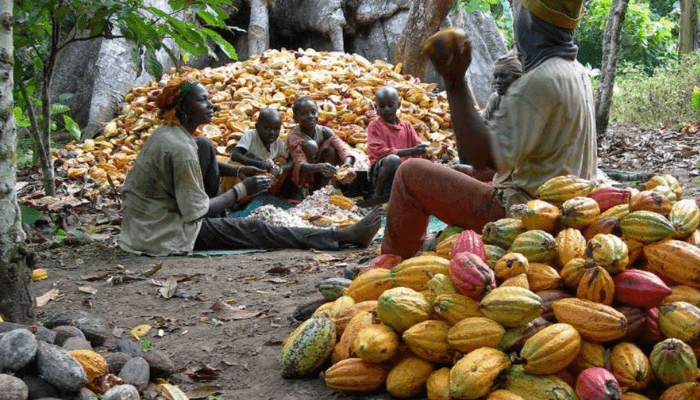
Ghana’s cocoa sector is under growing strain as payment delays to farmers threaten investment in the next harvest, following difficulties with a newly introduced cocoa purchasing and financing system.
Several cocoa farmers across the country have not been paid since November, according to farmer groups, raising concerns that critical farm maintenance activities needed for the next production cycle may be neglected. The situation has been worsened by international traders’ reluctance to provide upfront financing under the revised cocoa purchasing model introduced for the 2024/25 season.
Under the revamped system, the responsibility for pre-financing cocoa purchases was shifted from the Ghana Cocoa Board (COCOBOD) to international traders. The new arrangement requires traders to pay at least 60% of the value of forward contracts at the start of the season.
However, multiple sources familiar with the matter say international traders have refused to make these advance payments, citing falling global cocoa prices and concerns over profitability. As a result, Ghana currently the world’s second-largest cocoa producer has accumulated a significant stockpile of unsold beans, though the exact volume remains unclear.
COCOBOD did not respond to requests for comment.
Falling Cocoa Prices Complicate Sales
The financing challenges come amid a sharp downturn in the international cocoa market. Global prices have declined by about 20% so far this year, following a 50% fall last year. This is in stark contrast to 2024, when cocoa prices surged by as much as 160% due to supply shortages.
Despite the price drop, Ghana in October set its farmgate price at 58,000 Ghana cedis (about $4,640) per metric ton an increase of 12%. International prices are currently trading at roughly $4,700 per ton, leaving little margin for traders and licensed buying companies (LBCs).
Licensed Buyers Under Pressure
Sources within licensed buying companies say the mismatch between Ghana’s farmgate price and international market prices has made cocoa purchases commercially unsustainable.
One LBC source said COCOBOD is struggling to convince international traders to make advance payments given the price decline. Another described the farmgate price as “untenably high,” noting that buyers risk selling cocoa at a loss.
A third source said Ghanaian cocoa is now overpriced relative to the global market, making the new financing system difficult to operate.
All sources requested anonymity as they were not authorised to speak publicly.
Farmers Bear the Impact
Farmer groups warn that payment delays are already having serious consequences on the ground.
Speaking on local radio on Saturday, Stevenson Anane Boateng, President of the Ghana National Association of Cocoa Farmers, said many farmers have not received payment for their cocoa deliveries since November. The number of affected farmers remains unclear.
Theophilus Tamakloe, Vice President of the Ghana Cooperative Cocoa Farmers Association, said the delays are preventing farmers from servicing bank loans and carrying out essential farm work.
“January is a critical period for cocoa maintenance,” he said, noting that activities such as pruning and fertiliser application are now at risk, potentially undermining the next harvest.
A System Under Strain
For more than three decades, Ghana’s cocoa sector relied on a syndicated loan system under which COCOBOD raised funds annually to finance cocoa purchases. Licensed buying companies used these funds to pay farmers, with COCOBOD later selling the beans on international markets.
That system was abandoned after COCOBOD became unable to raise the necessary financing. However, industry sources say the new trader-financed model is now also facing serious structural challenges.
As the standoff continues, farmers remain unpaid, cocoa stocks pile up, and concerns grow that Ghana’s next cocoa harvest could be at risk unless urgent solutions are found.