
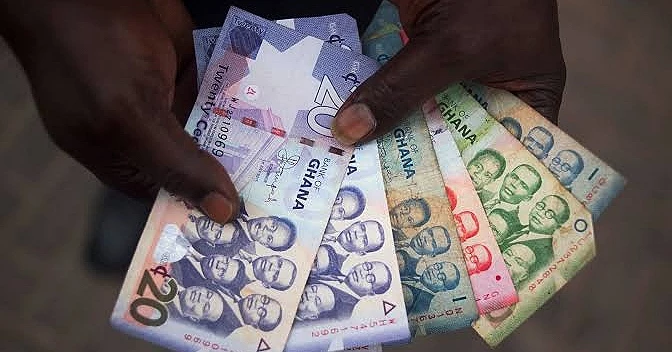
Currencies across sub-Saharan Africa are expected to show mixed performance this week, with Ghana’s cedi likely to weaken further, Nigeria’s naira projected to remain stable, and Kenya’s shilling expected to hold its ground, according to market traders.
Ghana
The Ghanaian cedi is forecast to face continued pressure in the coming days, largely due to sustained demand for foreign exchange from corporate players, particularly in the energy, services, and construction sectors.
On Thursday, the cedi traded at 10.97 to the US dollar, weakening from 10.85 recorded a week earlier, based on data from the London Stock Exchange.
Market participants say demand for dollars continues to exceed supply. “The local currency remains under mild pressure, with FX demand persistently outpacing supply,” said Ronald Mensah, a trader at Stanbic Bank Ghana. While the Bank of Ghana’s periodic spot FX auctions have provided some relief, he noted that tight market conditions remain.
Andrews Akoto, Head of Trading at Absa Bank Ghana, believes higher auction volumes planned for February could help ease some of the pressure. He explained that the central bank’s FX supply for February is expected to exceed January’s $1 billion allocation, which may reduce unmet demand.
Uganda
In Uganda, the shilling is expected to weaken this week as demand for hard currency rises, driven mainly by energy importers.
Commercial banks quoted the shilling at 3,562/3,572 per dollar on Thursday, compared to 3,475/3,485 the previous week. An independent forex trader in Kampala said the increased presence of energy importers in the market could weigh on the currency, projecting a trading range of 3,560 to 3,580.
Nigeria
Nigeria’s naira, however, is expected to remain largely stable, supported by foreign portfolio inflows following a recent bond auction and relatively muted demand for dollars.
The naira traded at 1,388 to the dollar on the official market on Thursday, strengthening from 1,419 a week earlier. Traders say the currency could even see further gains, especially with another bond auction expected in the coming week. In the parallel market, the naira traded at around 1,470 per dollar.
Kenya
Kenya’s shilling is also expected to remain stable this week, benefiting from balanced supply and demand conditions.
Commercial banks quoted the shilling at 128.80/129.10 per dollar on Thursday, virtually unchanged from last week’s levels. According to traders, while demand for the shilling is not particularly strong, steady inflows into the market have helped maintain stability.
Zambia
Zambia’s kwacha is set to continue its firm performance against the US dollar, supported by strong foreign exchange inflows from copper exports.
The currency strengthened to 20.29 per dollar on Thursday, improving from 20.53 a week earlier. Analysts at Access Bank attributed the positive outlook to rising copper production and sustained high global prices. Zambia recently announced an 8 percent increase in copper output for 2025, a development expected to support the currency in the medium term.
Copper accounts for more than 70 percent of Zambia’s export earnings and continues to benefit from strong global demand linked to green energy and technology investments.