

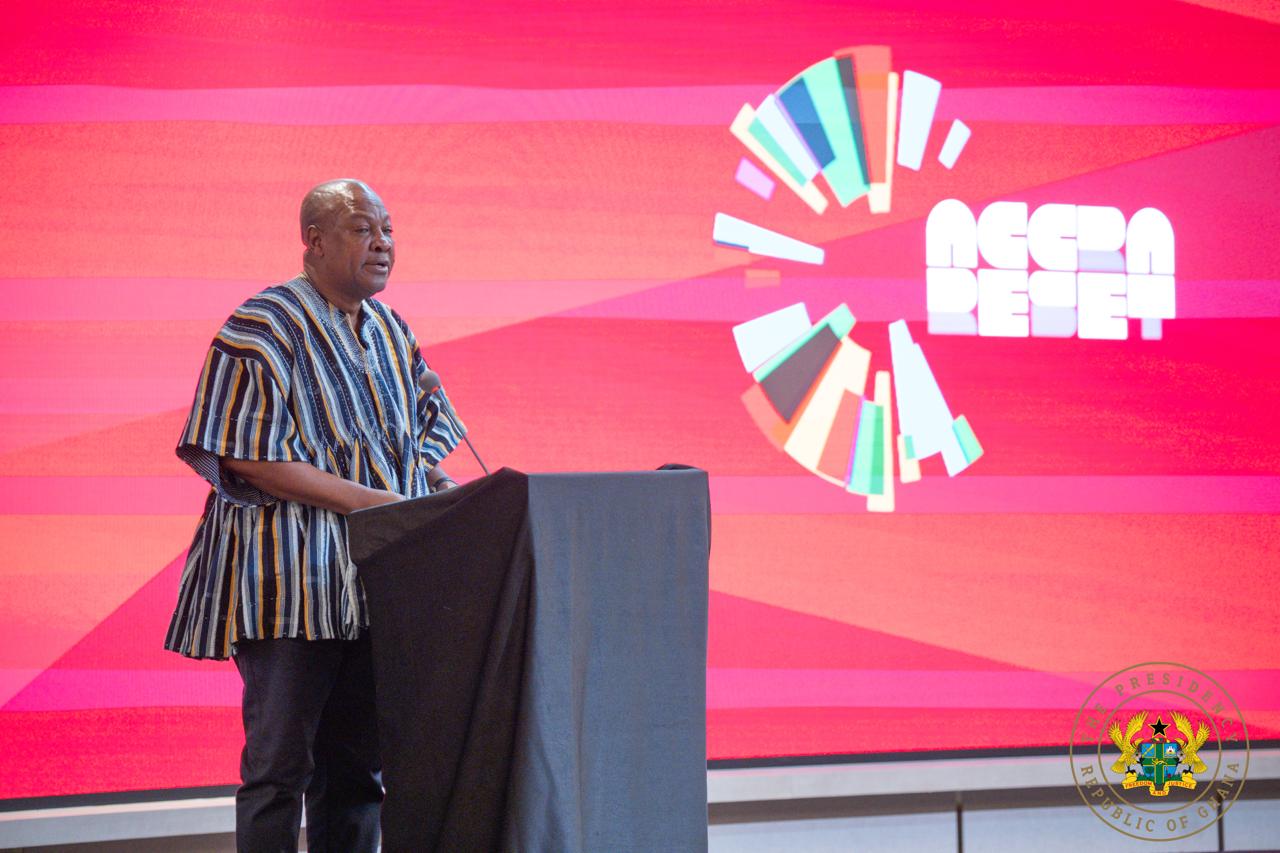
President John Mahama has announced major reforms aimed at strengthening Ghana’s control over its natural resources, revealing plans to stop foreign financing for cocoa purchases and end the export of raw mineral ores by 2030.
Speaking at his high-level side event, “Accra Reset’s Addis Reckoning,” held on the sidelines of the 39th African Union Assembly of Heads of State and Government in Addis Ababa, the President said the new direction signals a decisive shift toward economic sovereignty and value addition.
A key part of the reform is the decision to stop relying on foreign loans to purchase cocoa. Instead, Ghana will raise domestic bonds in Ghana Cedis to finance cocoa purchases directly from farmers.
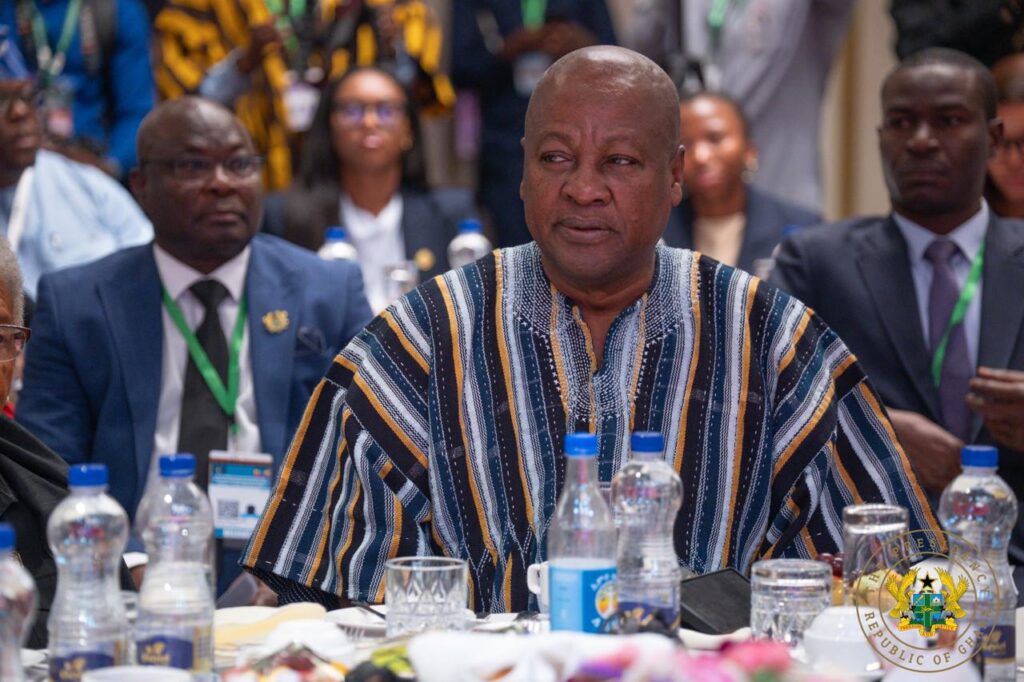
“One of the key decisions we’ve made is to stop accepting foreign funding for the purchase of our cocoa. We are going to raise domestic bonds. We have enough Cedis in Ghana to pay for our cocoa,” President Mahama said.
He explained that Ghana’s recent cocoa challenges exposed structural weaknesses in the current financing model. Producer prices were set when international cocoa traded at about $7,200 per tonne and the Ghana cedi stood at 11.5 to the dollar. However, when cocoa prices later dropped to $4,200 per tonne and the cedi appreciated to 10.7 per dollar, the country incurred significant losses.
Beyond price volatility, the President criticised the long-standing arrangement in which cocoa beans are used as collateral for foreign loans. Under that system, Ghana secures funding using its cocoa beans, purchases them from farmers, and is then required to ship the beans abroad to repay financiers at international market prices.
He noted that although Ghana has the capacity to process up to 400,000 tonnes of cocoa locally, the collateral agreements prevent the country from allocating those beans to domestic processors.
Under the new arrangement, raising funds locally in cedis will eliminate the need to pledge cocoa as collateral. This is expected to free up substantial volumes of beans for local processing, create jobs, and ensure more value remains within the Ghanaian economy.
President Mahama also announced an ambitious deadline to stop exporting unprocessed mineral ores.
“By 2030, there won’t be any raw mineral ores leaving Ghana. You’re not going to ship raw manganese ore out of Ghana. You’re not going to ship raw bauxite ore out of Ghana. You’re not going to ship raw iron ore out of Ghana. You must process all that locally,” he stated.
The President described the measures as part of his broader Accra Reset agenda, a continental initiative aimed at accelerating industrialisation, value addition and resource sovereignty across Africa.
He stressed that urgency is critical, particularly in the face of mounting pressure from Africa’s youthful population seeking jobs and economic opportunity. According to him, building domestic industries and processing capacity is key to creating employment and addressing migration challenges, as many young Africans risk dangerous journeys abroad in search of better prospects.
President Mahama urged African nations to move beyond discussions and focus on implementation, suggesting that willing countries form a coalition to fast-track reforms.
“If parts of the continent are not ready, let’s form a coalition of the willing to move this as quickly as possible, and let the others follow and join,” he said.
The announcements in Addis Ababa signal Ghana’s intention to lead by example in reshaping Africa’s economic model prioritising local processing, industrial growth and greater control over natural resources.
Source: The Presidency