

The Government has intensified efforts to attract Chinese investment into Ghana’s agricultural sector as part of a broader strategy to restructure and revitalise the national economy.
Speaking at the Chinese Lunar New Year Gala 2026 in Accra, Minister for Food and Agriculture, Eric Opoku, said agriculture has become central to Ghana’s economic recovery agenda under President John Dramani Mahama. He noted that the 2026 Budget positions agriculture as a key driver of industrial growth, export diversification, job creation and foreign exchange earnings.
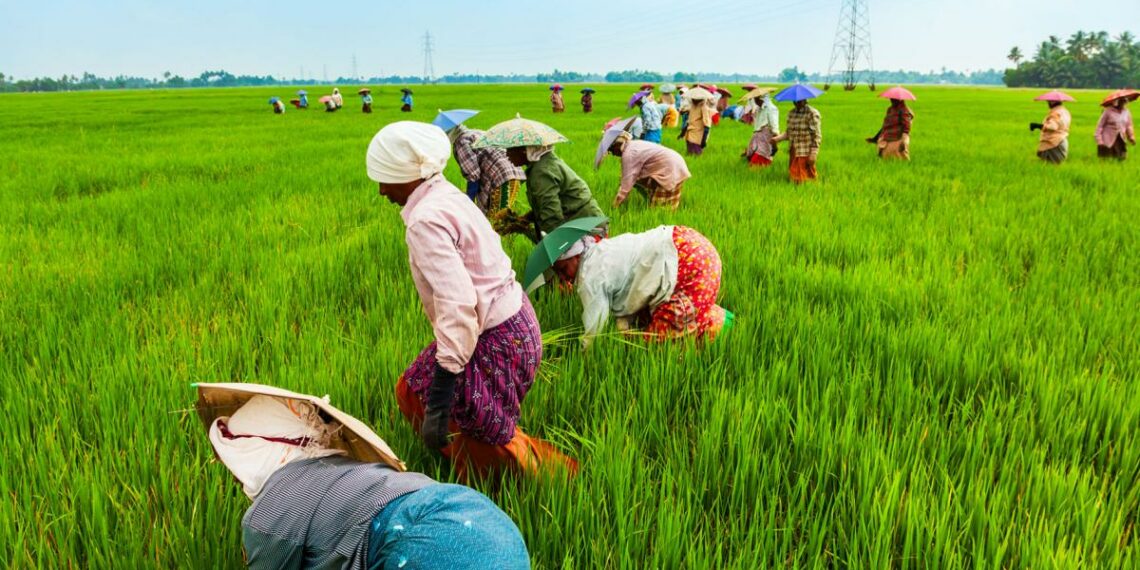
According to the Minister, government is implementing large-scale interventions for the 2026 farming season to raise productivity and strengthen food security. These include the distribution of 31,000 metric tonnes of rice seed, 4,388 metric tonnes of maize seed and 2,791 metric tonnes of soybean seed. In addition, 272,000 metric tonnes of fertiliser will be supplied to farmers nationwide.
He added that authorities are expanding irrigation infrastructure to reduce dependence on rainfall, particularly in northern Ghana. Plans are underway to open up thousands of hectares for irrigated farming and construct additional dams to support year-round cultivation.
Mr Opoku highlighted several areas where Chinese investors could play a strategic role, including irrigation systems, mechanised farming services, agro-processing facilities, machinery assembly plants and the development of agro-industrial enclaves.
A key component of the government’s strategy is the Integrated Oil Palm Development Programme (2026–2032), which seeks to establish 100,000 hectares of oil palm plantations. The initiative is projected to create about 250,000 jobs and reduce palm oil import expenditure by approximately 200 million US dollars annually.
Ghana is also offering organised land banks to facilitate large-scale agricultural projects and is encouraging partnerships in plantation development, value addition, refining and export-oriented agribusiness.
“We are not seeking aid. We are building joint ventures,” Mr Opoku said, urging investors to move beyond trade-focused engagements and channel resources into production and long-term industrial collaboration.
With access to a regional market of more than 400 million people within the Economic Community of West African States, the Minister said Ghana is positioning itself as a gateway for agricultural production and agro-industrial development across West Africa.