

Executive Management and Senior Staff of the Ghana Cocoa Board (COCOBOD) have agreed to temporary salary reductions for the remainder of the 2025/26 cocoa crop season as the cocoa regulator grapples with cash flow challenges.
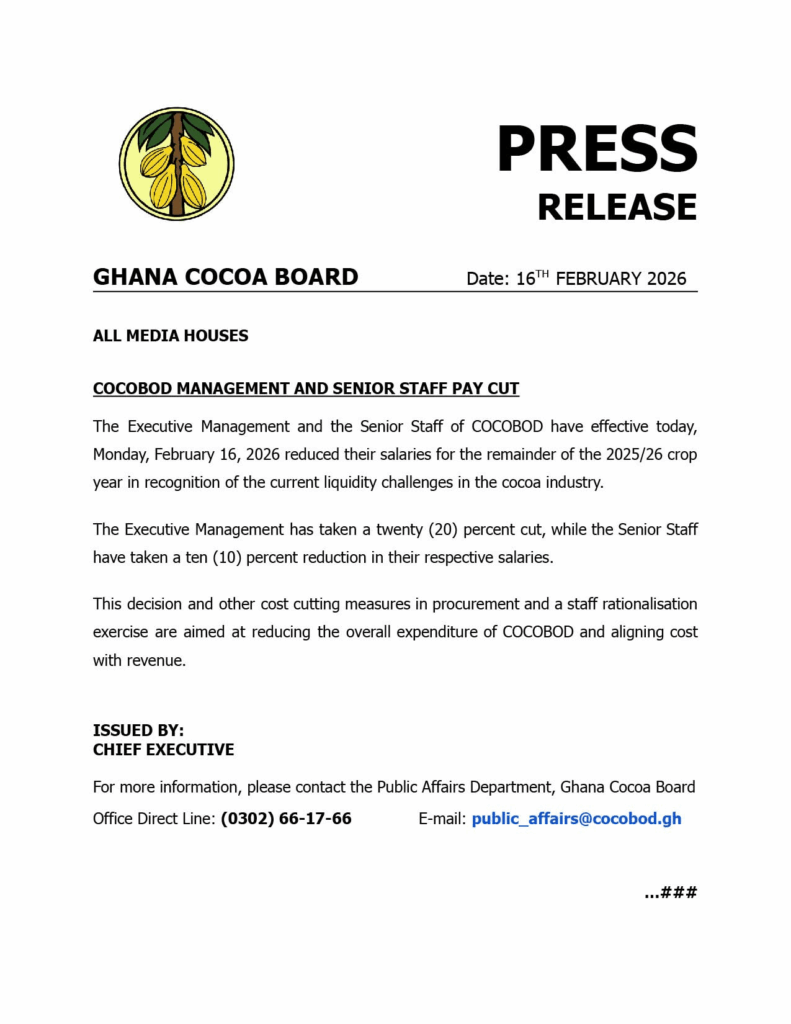
In a statement issued on Monday, February 16, 2026, COCOBOD announced that members of its Executive Management will take a 20 percent pay cut, while Senior Staff will accept a 10 percent reduction. The decision takes effect immediately and will run until the end of the current crop season.
According to the Board, the move forms part of a broader cost-containment strategy aimed at aligning expenditure with current revenue realities in the cocoa sector.
“The Executive Management and Senior Staff of COCOBOD have, effective Monday, February 16, 2026, agreed to reduce their salaries for the remainder of the 2025/26 crop year in recognition of the liquidity constraints facing the cocoa sector,” the statement noted.
Management explained that the salary reductions will be implemented alongside other cost-saving measures, including tighter procurement controls and an ongoing staff rationalisation exercise. These interventions, it said, are intended to reduce overall operational spending and ease financial pressure on the institution.
The development comes at a particularly challenging period for Ghana’s cocoa industry. Rising operational costs, concerns about farmer welfare, disputes over producer prices, and heightened public scrutiny of COCOBOD’s finances have dominated national conversations in recent weeks.
Observers have also raised concerns about the increasing cost of financing cocoa purchases and the impact of global price fluctuations on the sector’s stability. While the statement did not disclose the extent of the liquidity shortfall or the projected savings from the salary cuts, the Board’s decision is being interpreted as an attempt by top management to demonstrate shared sacrifice during a period of restructuring.
COCOBOD maintains that the temporary pay reductions will remain in force until the close of the 2025/26 crop season, as part of wider efforts to stabilise its finances and strengthen the sustainability of Ghana’s cocoa industry.