

Nigerians are facing renewed pressure on household budgets after petrol prices jumped by about 13 per cent within 48 hours, following a sharp rise in global crude oil prices triggered by escalating conflict between the United States and Iran.
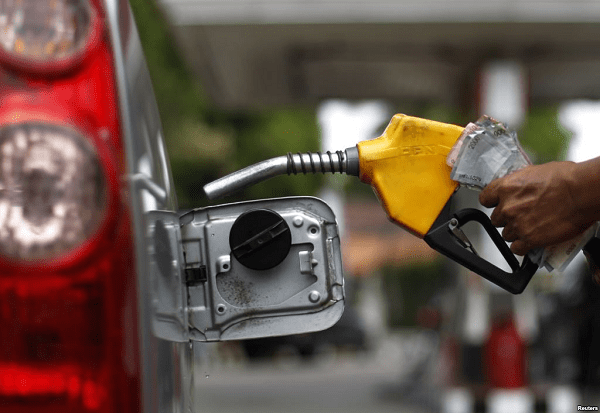
At filling stations across parts of the country, petrol prices rose from about N860 per litre to as high as N970. The increase is among the steepest since President Bola Tinubu removed fuel subsidies in 2023, a move that fully exposed Nigeria’s downstream market to global oil price fluctuations.
For many motorists, the change was abrupt. Taiwo Adeyemi, a 34-year-old logistics driver in Lagos, said he was stunned when he arrived at a filling station on Tuesday to find the new price displayed. “I cannot absorb this. Everything I earn goes into the tank,” he said, noting that the increase significantly affects his daily income.
The immediate trigger for the hike was a decision by Dangote Petroleum Refinery to suspend petrol loading operations at midnight on March 2 after international crude prices surged past $80 per barrel. By Tuesday morning, the refinery had raised its ex-depot price of Premium Motor Spirit from N774 to N874 per litre, citing changes in global crude fundamentals and higher replacement costs.
The adjustment quickly filtered through the supply chain. Several private depot owners temporarily suspended sales due to concerns over replacement costs, while marketers revised pump prices upward, with some selling at N925 per litre and others closer to N940. Retail outlets in Abuja and other cities confirmed new pricing had taken effect.
Diesel prices also recorded significant increases. The refinery raised its ex-depot price of Automotive Gas Oil from N880 to N1,050 per litre. Even before the official announcement, diesel prices had been firming across private depots, with averages hovering around N1,150 per litre.
For businesses that rely heavily on diesel including manufacturers, hospitals, transport operators and small enterprises dependent on generators the increase threatens to raise operating costs and reverse recent stability in expenses.
The development comes at a delicate time for Nigeria’s economy. After peaking in 2024, inflation had been moderating steadily. Annual inflation slowed to 15.10 per cent in January 2026, the lowest level since November 2020, while food inflation eased to 8.89 per cent. Core inflation also declined to 17.72 per cent.
Economists warn that higher fuel costs could quickly reverse these gains. With deregulated pricing in place, increases in international crude prices translate directly into higher domestic fuel prices, feeding into transportation, food distribution and manufacturing costs.
Transportation and food make up a large share of Nigeria’s consumer price basket, meaning petrol price increases often have a broad ripple effect across the economy, affecting everything from farm produce distribution to electricity generation for small businesses.
The global oil rally was sparked by escalating hostilities in the Middle East. Coordinated strikes by US and Israeli forces on Iran led to retaliatory missile attacks and disruptions near the Strait of Hormuz, a critical oil shipping route through which about one-fifth of the world’s seaborne crude passes. The tensions pushed Brent crude from around $72.87 to over $83 per barrel within days, with intraday peaks approaching $85.
Industry stakeholders have cautioned that pump prices could rise further if the conflict persists. Some marketers project prices in the Federal Capital Territory could approach N1,000 per litre, depending on logistics and supply conditions. Economists have similarly warned that prolonged instability in the Middle East could push crude prices even higher, worsening pressure on domestic fuel markets.
For now, Nigerians are bracing for higher transportation fares and increased prices of goods and services, as the ripple effects of the international crisis begin to filter through the economy.