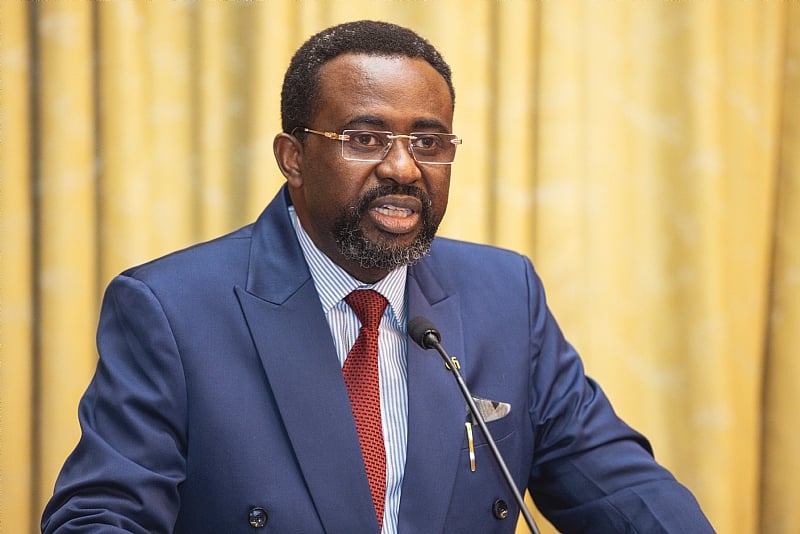


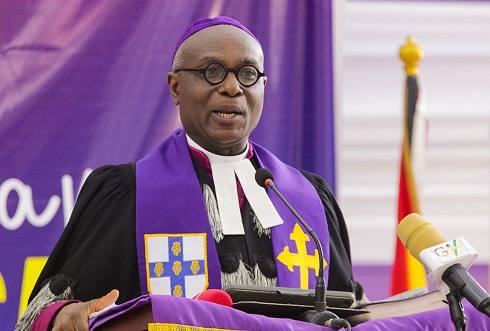
The Presiding Bishop of the Methodist Church in Ghana, Professor Kwabena Asamoah-Gyadu, has issued a strong warning against what he describes as a rising culture of deceptive prophetic practices within contemporary Christianity, following the fallout from failed prophecies linked to the just-ended New Patriotic Party (NPP) presidential primaries.
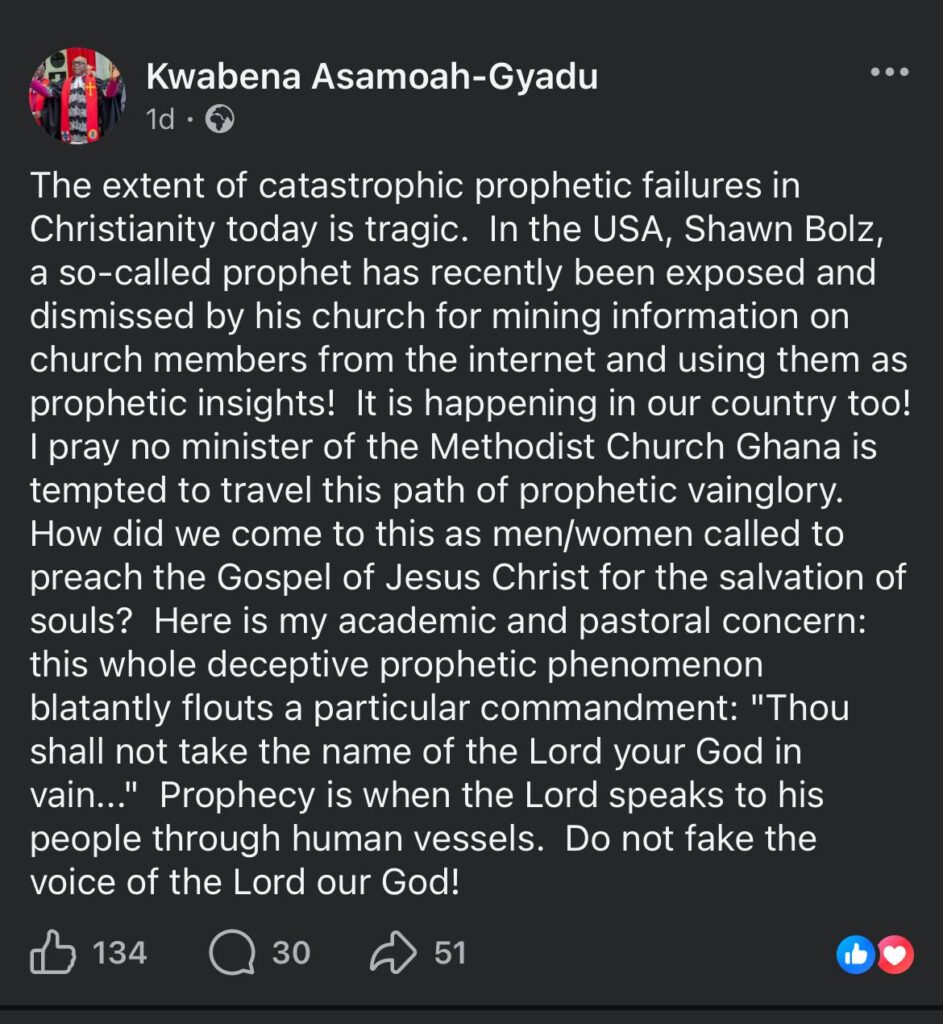
In a Facebook post published on Saturday, January 31, 2026, Prof Asamoah-Gyadu expressed deep concern over what he called the alarming rate of prophetic failures both in Ghana and globally. He noted that recent political developments in Ghana, particularly the NPP primaries that produced Dr Mahamudu Bawumia as flagbearer for the 2028 general elections, exposed the unreliability of several widely publicised prophecies, forcing at least one prominent Ghanaian prophet to issue a public apology.
“The extent of catastrophic prophetic failures in Christianity today is tragic,” the Methodist leader wrote, describing the situation as a serious crisis of credibility for prophetic ministries.
Placing the issue in a broader international context, Prof Asamoah-Gyadu cited developments in the United States involving well-known charismatic figure Shawn Bolz, who was dismissed by his church after being exposed for allegedly mining personal information about church members online and presenting it as divine revelation.
“In the USA, Shawn Bolz, a so-called prophet, has recently been exposed and dismissed by his church for mining information on church members from the internet and using them as prophetic insights,” he noted, adding pointedly, “It is happening in our country too!”
The Presiding Bishop, who also serves as the Baëta-Grau Professor of Pentecostalism at the Trinity Theological Seminary (TTS), cautioned ministers especially within the Methodist Church of Ghana, against the temptation of what he termed “prophetic vainglory.”
“I pray no minister of the Methodist Church in Ghana is tempted to travel this path of prophetic vainglory,” he said.
Beyond ethics, Prof Asamoah-Gyadu framed the issue as a serious theological and moral failure that undermines the core mission of Christian ministry.
“How did we come to this as men and women called to preach the Gospel of Jesus Christ for the salvation of souls?” he asked.
At the heart of his criticism was what he described as a clear violation of the Third Commandment, warning that false prophetic claims amount to taking God’s name in vain.
“This whole deceptive prophetic phenomenon blatantly flouts a particular commandment: ‘Thou shalt not take the name of the Lord thy God in vain,’” he stated.
Clarifying the Christian understanding of prophecy, the Methodist leader stressed that genuine prophecy is not about public performance, prediction, or personal fame, but divine communication meant to edify God’s people.
“Prophecy is when the Lord speaks to His people through human vessels,” he wrote, concluding with a stern admonition that has since sparked widespread discussion online: “Do not fake the voice of the Lord our God!”
His remarks have reignited debates within Christian circles about accountability, discernment, and the growing public scepticism surrounding prophetic declarations—particularly those tied to electoral politics. As Ghana’s religious life continues to intersect with national political events, many observers see Prof Asamoah-Gyadu’s intervention as a timely call for humility, restraint, and a return to doctrinal integrity in prophetic practice.