


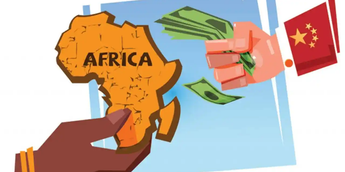
For much of the past two decades, China was Africa’s go-to financier funding roads, railways, power plants and other major infrastructure projects across the continent. Today, that relationship is undergoing a quiet but significant shift.
According to a new analysis by ONE Data for the Development Finance Observatory, China is no longer primarily lending to poorer countries. Instead, it is increasingly collecting on past loans.
Over the last decade, new Chinese lending to developing nations has fallen sharply, even as debt repayments to Beijing continue to rise. Between 2010 and 2014, China provided net funding flows of about $30.4 billion. In contrast, over the past five years, it has received $22.1 billion more in repayments than it disbursed in new loans.
The impact is being felt most strongly in Africa. Many low- and middle-income countries on the continent are now sending more money to China in debt servicing than they are receiving in fresh financing. This reversal has strained public finances, making it harder for governments to fund essential services and invest in development projects.
As China steps back, multilateral institutions such as the World Bank and the International Monetary Fund have stepped forward. Between 2020 and 2024, multilateral lenders increased their net financing by 124%, accounting for 56% of all net development finance flows — roughly $379 billion over the period. Once debt repayments are considered, these institutions have become the dominant source of development funding.
While the shift away from Chinese lending represents a “net negative” in the short term for African countries, the report notes a possible silver lining. Reduced dependence on external lenders could encourage stronger domestic accountability and better revenue mobilisation by governments.
However, the broader outlook remains challenging. The study highlights a continued decline in bilateral financing and private external debt flows trends expected to worsen as global aid budgets face cuts from 2025 onward.
Yuan Gains Ground in Africa
Even as lending slows, China’s engagement with Africa is evolving rather than disappearing. Beijing is increasingly promoting financial integration, particularly through the use of the Chinese yuan.
Although the yuan still makes up less than 2% of global foreign exchange reserves, Africa is emerging as a testing ground for China’s push to internationalise its currency and reduce reliance on the U.S. dollar.
In December, Zambia became the first African country to officially accept the yuan for mining taxes and royalties. Earlier, Kenya converted three major Chinese railway loans from U.S. dollars to yuan, citing lower interest costs. Ethiopia has also begun discussions with China on converting part of its dollar-denominated debt into yuan.
These developments signal a new phase in China–Africa relations one less focused on large-scale lending and more on debt management, currency influence and financial restructuring.