
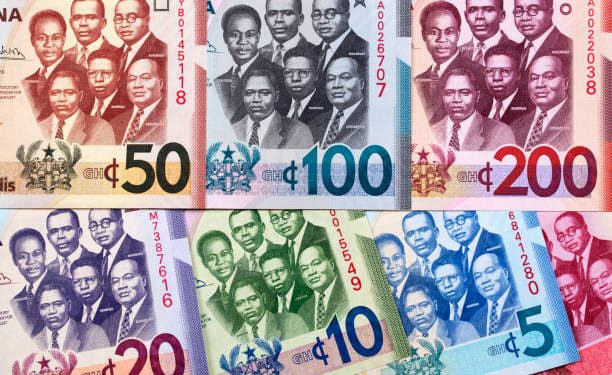
Ghana’s local currency, the cedi, has begun February 2026 under renewed pressure, following a noticeable widening gap between official Bank of Ghana (BoG) exchange rates and prices offered by forex bureaus.
At the start of the week on Monday, February 2, 2026, the BoG’s interbank foreign exchange market quoted the US dollar at GH¢10.94 for buying and GH¢10.95 for selling. While the spread remains narrow, the figures represent a slight depreciation from the GH¢10.88 recorded in the final week of January.
However, conditions in the retail forex market tell a different story. Checks by Citi Business News reveal significantly higher rates at forex bureaus, underscoring growing pressure in the informal market. The US dollar was being bought at around GH¢11.75 and sold at as much as GH¢12.10.
This translates into a selling gap of approximately GH¢1.15 between the BoG’s interbank rate and the price faced by individuals and small businesses at forex bureaus. Such a disparity typically signals liquidity constraints in the official market, forcing market participants to source foreign currency through more expensive retail channels.
The divergence is not limited to the US dollar. Other major currencies are showing similar patterns. The British pound was quoted on the interbank market at GH¢15.01 for buying and GH¢15.03 for selling, while forex bureaus were offering the currency at prices as high as GH¢16.30 a premium of more than one cedi per pound.
Likewise, the euro was selling on the interbank market at GH¢13.01, but bureau rates climbed to around GH¢14.30.
Market analysts attribute the early-February volatility largely to a seasonal surge in foreign currency demand. The start of a new financial year often sees businesses increase import-related transactions, placing immediate strain on available forex supply and reserves.
The Bank of Ghana is expected to continue its market interventions to limit excessive volatility. However, the near-term outlook for the cedi will depend on several key factors, particularly supply conditions. Elevated bureau rates suggest that current forex supply is struggling to keep pace with strong importer demand.
For investors and businesses, attention is now firmly on whether the central bank can narrow the widening spread between interbank and bureau rates a move that would help restore predictability and confidence in the foreign exchange market.
source: Citinews