

Private sector leaders have praised President John Dramani Mahama for restoring macroeconomic stability in Ghana, pointing to the strengthening of the cedi and the decline in interest rates as signs of renewed confidence in the economy. The cedi has appreciated by 40.7 percent against the US dollar in 2025 and is currently trading at GH¢10.9756 per dollar, while borrowing costs have fallen sharply, easing conditions for businesses.
The commendation came during an Evening Direct Government–Private Sector Partnership Engagement, a forum promised by the President during his 2024 campaign to foster continuous dialogue between government and business leaders on economic reforms and growth priorities. Participants included representatives from finance, agribusiness, manufacturing, construction, retail, and the digital economy, who described the current economic environment as significantly improved.
Business leaders noted that in 2024, policy and commercial lending rates peaked at around 47 percent, constraining access to credit and limiting private investment. The recent reversal, with interest rates declining to about 13 percent and short-term government securities trading as low as 6.6 percent, has improved liquidity and enhanced planning, pricing, and investment decisions.
Finance Minister Dr. Cassiel Ato Forson projected a 4.8 percent GDP growth for 2026, attributing it to government efforts to maintain stability and promote growth. Inflation has dropped considerably, falling from 23.8 percent in 2024 to 3.8 percent in January 2026.
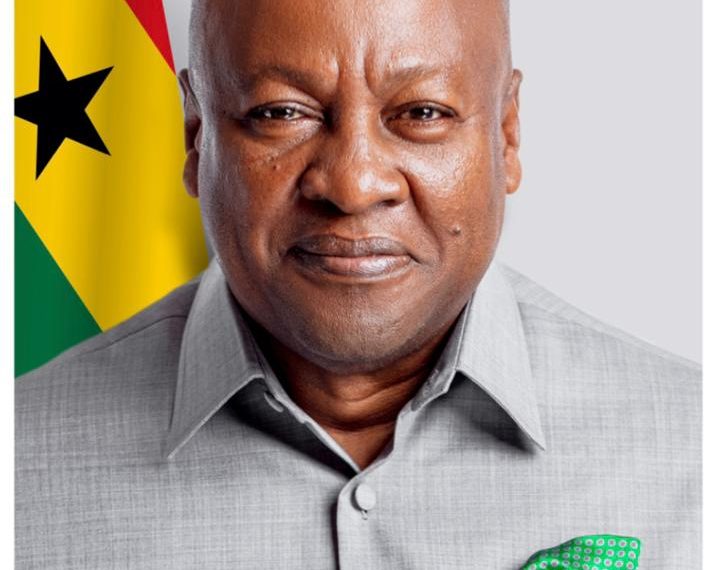
Addressing the gathering, President Mahama emphasized Ghana’s ambition to become an industrial hub for West Africa and Africa, anchored on value addition, competitive manufacturing, and export-led growth. He said that macroeconomic discipline, stable exchange rates, and affordable financing are critical prerequisites for industrialization. The government’s strategy, he noted, focuses on creating a predictable environment that enables the private sector to invest, scale operations, and compete in regional and continental markets.
Private sector leaders welcomed the industrial vision, highlighting it as a major opportunity for businesses. They said that the combination of currency stability, lower interest rates, and structured engagement with government provides a strong foundation for expanding manufacturing, strengthening regional supply chains, and creating jobs. One manufacturing representative noted that the current economic direction presents “a much bigger opportunity” for both local and foreign investment.
Participants also praised the institutionalization of regular government–private sector engagements, describing the forum as an effective way to identify bottlenecks, track reforms, and align policy with real-economy needs.
President Mahama reaffirmed his commitment to private-sector-led growth, assuring businesses that the engagement series will continue as a feedback mechanism to refine policies and accelerate implementation. He stressed that stabilizing the cedi and lowering interest rates are part of a broader strategy to restore confidence, encourage investment, and support Ghana’s long-term industrial transformation.