
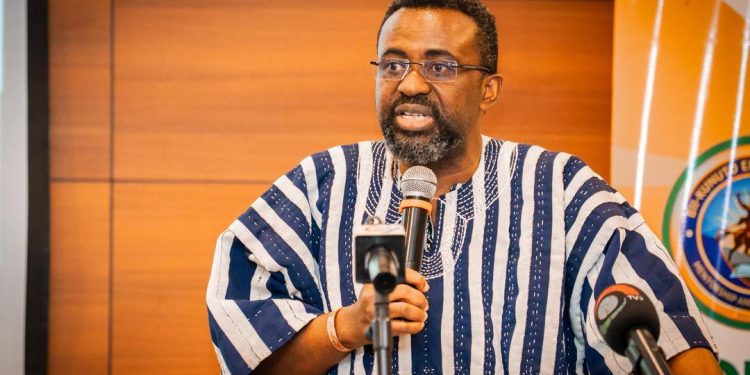
Bank of Ghana Governor, Dr. Johnson Pandit Asiama, has disclosed that the central bank’s GH₵17 billion liquidity stabilization effort in 2025 played a decisive role in bringing inflation down sharply to 3.3 percent.
Speaking before Parliament’s Committee on Economy and Development on Monday, Dr. Asiama explained that when he assumed office, inflation was still high and existing monetary conditions were not strong enough to bring prices down quickly.
According to him, one of the major challenges at the time was the presence of excess structural liquidity within the banking system. This situation weakened the transmission of monetary policy and allowed inflationary pressures to persist longer than expected.
To address the problem, the Bank of Ghana intensified its open market operations. Through these measures, the central bank absorbed excess liquidity from the banking system and paid interest on those funds to prevent too much money from circulating in the economy.
Dr. Asiama noted that liquidity management through open market operations is a standard tool used by central banks around the world to ensure that monetary policy decisions effectively influence financial markets and economic activity.
He indicated that the strategy has helped restore stability to Ghana’s economy and rebuild market confidence.
Inflation, which stood at 23.8 percent in December 2024, has since declined dramatically to 3.3 percent as of February 2026one of the lowest readings recorded in recent years.
Dr. Asiama explained that the sharp drop in inflation means the purchasing power of Ghanaians is no longer being rapidly eroded by rising prices.
He added that the cedi has also stabilized while interest rates have started declining, easing borrowing conditions for both businesses and households. Confidence across the economy, he said, has gradually improved.
The country’s external buffers have also strengthened, with gross international reserves rising to about US$13.8 billion—enough to cover approximately 5.7 months of imports.
In line with the Bank of Ghana’s transparency commitments, the Governor also revealed that the liquidity management operations carried an interest cost of about GH₵17 billion.
However, he explained that these financial costs are the accounting outcome of the broader economic stabilization now being experienced across the country.
Dr. Asiama emphasized that the measures were necessary to restore the effectiveness of monetary policy, reduce inflationary pressures and stabilize the exchange rate.
“For ordinary Ghanaians, the most important signal of recovery is simple,” he said. “Prices are stabilizing, the cedi is steadier, and the economy is moving back toward normal.”
He assured Parliament that the Bank of Ghana will continue to focus on maintaining price stability while supporting the conditions needed for sustainable economic growth.