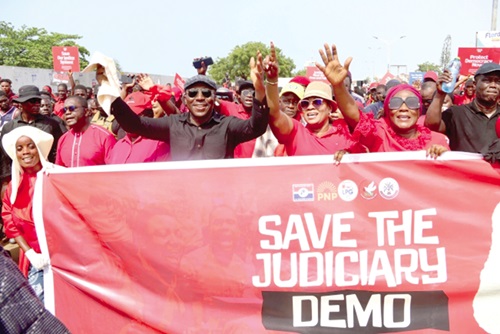
A coalition of opposition political parties, led by the New Patriotic Party (NPP), took to the streets on Monday in a bold protest against the suspension of Chief Justice Gertrude Torkornoo. The demonstration, organized under the theme “Article 21 Demo,” condemned the move as a dangerous assault on judicial independence and a violation of constitutional governance.
Protesters demanded the immediate reinstatement of the Chief Justice, arguing that her suspension represents a broader pattern of executive interference under President John Mahama’s administration. NPP Communications Director Richard Ahiagbah accused the ruling National Democratic Congress (NDC) of orchestrating an attack on the judiciary. “This is not just about one judge, it’s about the future of the rule of law in Ghana,” Ahiagbah declared on social media ahead of the protest.
Legal backlash has been swift. The Ghana Bar Association (GBA) has described the suspension as unconstitutional and warned of the long-term implications. GBA spokesperson Saviour Kudze acknowledged that Article 146(10) allows for presidential discretion in judicial suspensions, but stressed that the absence of clear constitutional instruments to regulate this power leaves room for abuse. He revealed that during an emergency meeting on April 26, GBA members unanimously opposed the president’s action.
The presidency, however, insists that due process was followed, including consultations with the Council of State. Justice Torkornoo’s suspension is tied to pending impeachment petitions, but critics argue that the executive branch has crossed a line, threatening the balance of power enshrined in the 1992 Constitution.
This unprecedented suspension of a sitting Chief Justice has intensified public debate over Ghana’s democratic resilience and institutional integrity. As legal scholars warn of a potential erosion of judicial independence, all eyes remain on the government’s next move amid rising political tensions and civil resistance.